


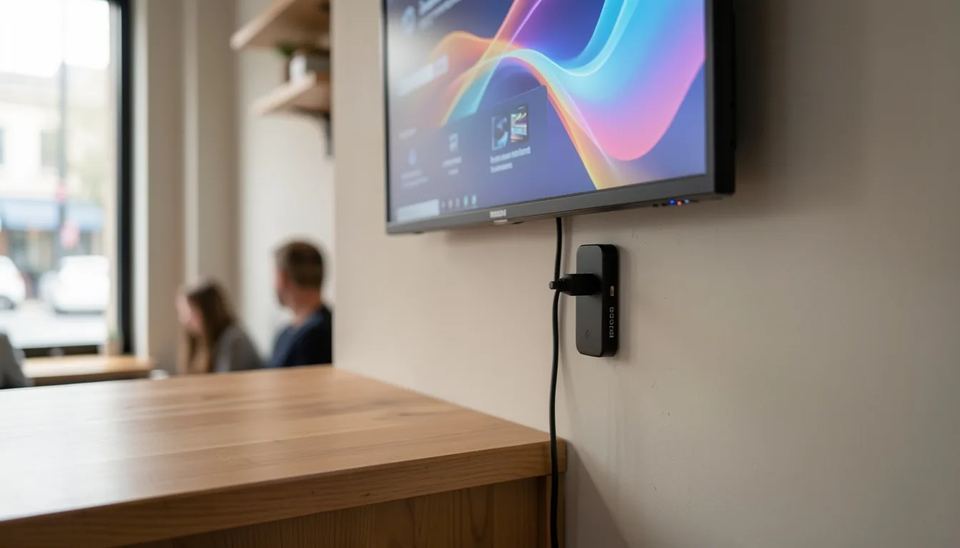
For most businesses in 2026, the best digital signage player is the Look Verde PRO. It costs $149 and has a 4 nm chip, true 4K HDR, Wi-Fi 6 and Gigabit Ethernet, USB power from the TV, CEC scheduling and a hardware watchdog. Pick the $99.99 Amazon Signage Stick for cheap Wi-Fi screens. Pick BrightSign HD226 ($595 list, 5-year warranty) when you need enterprise I/O.
Key takeaways
- The Look Verde PRO ($149, on pre-order) is the best all-round signage player for small and mid-size networks, because it runs off the TV USB port, controls the TV over HDMI CEC and restarts itself if it hangs.
- The Amazon Signage Stick is the cheapest dedicated player at $99.99, but it has no Ethernet port and needs its own power socket.
- BrightSign HD226 costs roughly 4 times as much as a stick player and pays off where you need GPIO, serial control or a 5-year warranty.
- Raspberry Pi 5 and generic Android boxes look cheap per unit, but the power supply, cooling and setup time push the real cost up.
- Over 3 years, the CMS subscription usually costs more than the player, so judge hardware on uptime and site visits saved, not only the sticker price.
Which digital signage player should you buy in 2026?
With 1 to 50 screens on ordinary TVs, buy the Look Verde PRO. With a strict $100 budget and good Wi-Fi, the Amazon Signage Stick works. BrightSign is for flagship stores, museums and integrators who need hardware control ports.
A signage player is the small computer behind the screen that downloads your content from the CMS (content management system, the web dashboard where you build playlists) and plays it on a loop. The table compares the options on the specs that decide uptime.
| Player | Price | Chip | 4K HDR | Network | Warranty |
|---|---|---|---|---|---|
| Look Verde PRO | $149 (pre-order) | Quad Cortex-A55 2.5 GHz, 4 nm, 4 GB RAM | True 4K with HDR | Wi-Fi 6 + Gigabit Ethernet | 1 year, worldwide |
| Look HD-2222 | $189 | Rockchip RK3568 | 4K | Wi-Fi 6 | Not stated here |
| Look HD-2222 Lite | $139 | Rockchip RK3566 | 4K | Wi-Fi 5 | Not stated here |
| Amazon Signage Stick | $99.99 | Quad-core 2.0 GHz, 2 GB RAM | 4K, HDR10, HDR10+, HLG | Wi-Fi 6E, Ethernet via adapter | 1 year limited |
| BrightSign HD226 | $595 list | Series 6 with NPU | 4K60, 10-bit HDR | 2x Ethernet, Wi-Fi optional | 5 years |
| Raspberry Pi 5 (4 GB) | $110 list | BCM2712, Cortex-A76 2.4 GHz | Dual 4Kp60 with HDR | Wi-Fi 5 + Gigabit Ethernet | Not stated |
| Generic Android box | Varies | Varies | Varies | Varies | Varies |
For the wider category, including PC players and SoC displays, see our digital signage players guide.
Why USB power, CEC scheduling and a watchdog matter in real installs
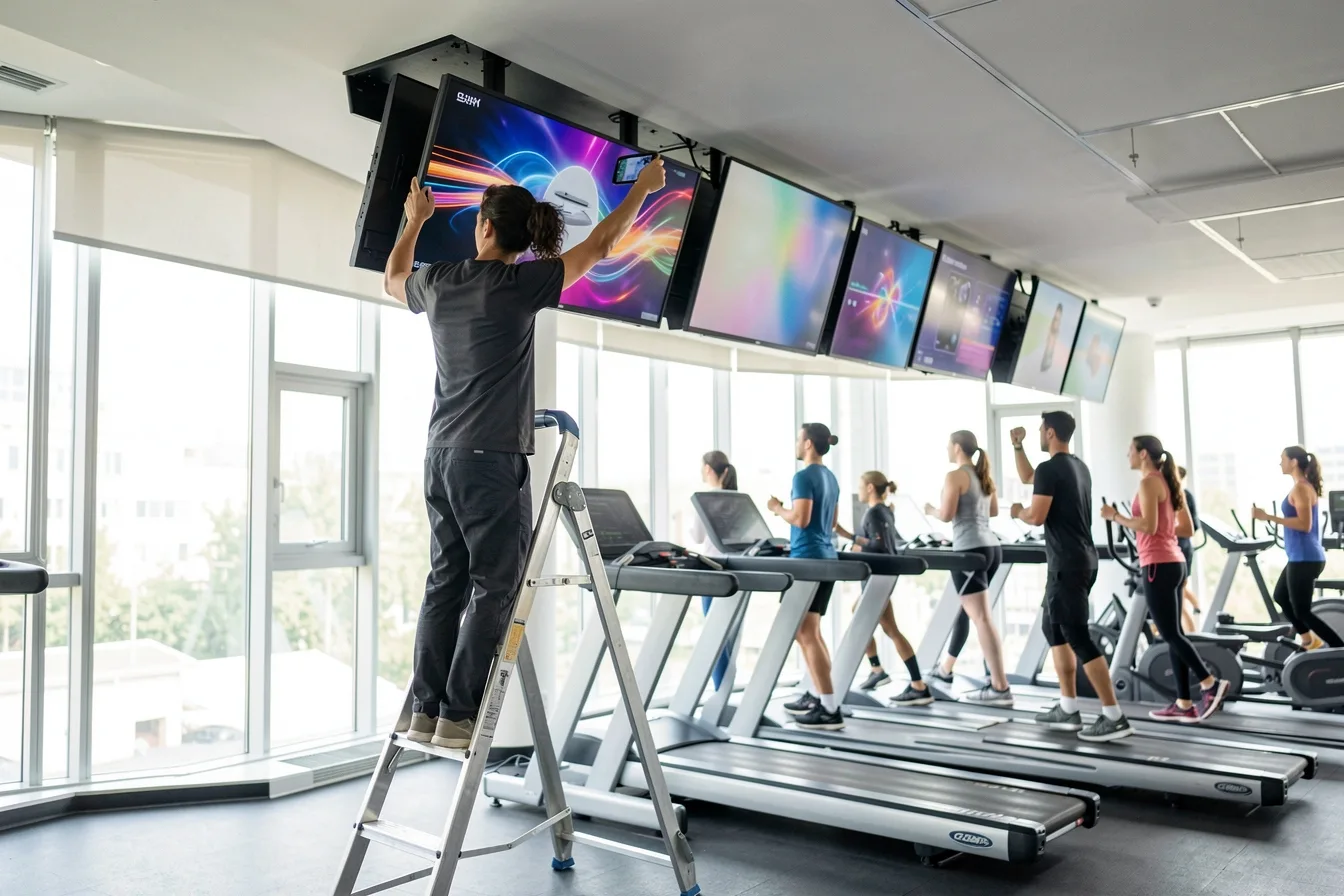
These three features decide how often someone climbs a ladder. On a big install, the screens rarely fail. The things that cause trouble are the power brick, the TV that stays on all night and the player that froze at 3 a.m. and nobody noticed until lunch.
USB power from the TV
A player that runs off the TV USB port needs no free socket behind the screen. On ceiling mounts and menu boards that one socket is often missing, so a power brick means an electrician visit or an extension lead taped to the wall. Many stick players still need their own outlet. For the Amazon Signage Stick, the piSignage player notes say a separate plug point is required.
One field tip: some TVs cut USB power in standby or supply too little current. If you want the player to wake the TV in the morning, check that the port stays live, or use the supplied adapter.
HDMI CEC control
CEC (Consumer Electronics Control) lets the player send power and input commands to the TV over the HDMI cable. So the player switches the screen off at closing time, on before opening, and back to the right input after a cleaner presses the remote. You save electricity, you cut burn-in risk on static menus, and staff stop phoning you about a “No signal” screen.
Hardware watchdog
A watchdog is a timer chip that reboots the player automatically if the software stops responding. Without one, a frozen player shows a stuck frame until someone pulls the plug. Across 30 sites, that one feature is the difference between a self-healing network and a weekly round of support calls.
Look Verde PRO is the lead pick for most screens
Look Verde PRO is a $149 HDMI stick player from Look Digital Signage, on pre-order and shipping within 3 weeks. It has a 4 nm quad-core chip, true 4K HDR, Wi-Fi 6 and Gigabit Ethernet. It runs Look DS software, priced from $15 per screen per month or $6 with yearly volume billing, and suits businesses that want one silent box per screen with no power brick and no IT visit.
The spec sheet, from the Look Verde PRO product page:
- Quad-core Cortex-A55 at 2.5 GHz on a 4 nm process, Mali-G310 V2 GPU, 4 GB DDR4 and 32 GB storage
- Wi-Fi 6 and Gigabit Ethernet in the same stick, so no adapter dongles
- Powered from the TV USB port or the supplied adapter
- Full HDMI CEC: power, input switching and on/off schedules
- Passive cooling, so it runs silent, and the 4 nm chip runs cooler and uses less power under 24/7 load
- Hardware watchdog that restarts it if it hangs
- Look DS firmware pre-installed, with auto-start and background updates, and support for 100% of Look features
- 109 x 45 x 20 mm, 60 g, 1-year worldwide warranty, tracked global shipping
The software side matters as much as the box. Look DS plays content offline when the Wi-Fi drops, runs in the cloud or on-premise, and supports a white-label and reseller program. Look Player is free and also runs on Android, Windows, Linux, macOS, LG webOS, Samsung Tizen, Raspberry Pi and Fire OS, so you can mix Verde sticks with screens you already own. Look DS holds a 4.9 rating on Capterra from 116 reviews. Plans are on Look’s pricing page.
Pros: USB power, CEC scheduling, watchdog, Ethernet and Wi-Fi 6 at $149, plus offline playback. Cons: it is on pre-order right now, and it ships from Look’s own shop, not from big retailers. The 1-year warranty is shorter than BrightSign’s 5 years.
Look HD-2222 and HD-2222 Lite
The HD-2222 ($189, Rockchip RK3568, 4K, Wi-Fi 6) is the previous flagship. The Verde PRO is newer and $40 cheaper, so it makes sense to buy the HD-2222 only to match an existing fleet. The HD-2222 Lite ($139, RK3566, Wi-Fi 5) suits simple image and video loops on a wired or solid 5 GHz network. Setup is the same on all Look players, as shown in this Look player setup video.
Amazon Signage Stick and Fire TV, the cheapest dedicated option
The Amazon Signage Stick is a $99.99 player with a quad-core 2.0 GHz chip, 2 GB RAM, 16 GB storage and Wi-Fi 6E. It boots straight into your CMS in kiosk mode, and the Amazon listing lists HDR10, HDR10+ and HLG playback. The only ports are HDMI and micro-USB, so wired networking needs Amazon’s micro-USB Ethernet Adapter at $14.99, according to Brix.
Consumer Fire TV sticks are cheaper still, but they are built for home streaming, with a consumer account and no unattended kiosk mode. Use them for a single test screen, not a network.
Pros: lowest price for a purpose-built player, Wi-Fi 6E, secure boot, wide CMS support. Cons: no built-in Ethernet, a separate power outlet, 2 GB RAM for heavy multi-zone layouts, 1-year limited warranty.
BrightSign HD226 for enterprise I/O and a 5-year warranty
BrightSign HD226 is a Series 6 4K player with 10-bit HDR, two Ethernet ports, GPIO, serial and an NPU (a chip for on-device AI tasks). B&H lists it at $525 with a locking power supply and a limited 5-year manufacturer warranty. Wi-Fi is not built in. You add an M.2 module such as the WD105, listed at £75 RRP by Midwich.
Pick it when a screen triggers on a button press or sensor, or talks to a lighting controller. Also pick it when your contract demands a 5-year warranty. For a menu board that loops 12 slides, you pay for ports you will never use.
Pros: proven 24/7 platform, GPIO and serial control, long warranty. Cons: about 4 times the price of a stick, needs its own 12 V supply, Wi-Fi costs extra.
Raspberry Pi 5 and generic Android boxes need more of your time
Both are cheap per unit and expensive in labour. Choose them only if you have someone who enjoys maintaining them.
Raspberry Pi 5 list price by RAM version, USD (April 2026)
Raspberry Pi 5
The official Raspberry Pi 5 product brief lists a 2.4 GHz Cortex-A76 chip, dual 4Kp60 HDMI with HDR and production until at least January 2036. List prices run from $45 to $305 depending on RAM. You also need the 27 W USB-C supply, a case, a microSD card and cooling: in bret.dk’s review, an uncooled Pi 5 under full load throttled in 9 seconds and dropped to 1.5 GHz at 85°C. Our Raspberry Pi signage setup guide covers the steps.
Pros: strong CPU, Gigabit Ethernet, long production life. Cons: a brick, fan and SD card to manage, and memory-driven price rises on higher RAM versions.
Generic Android boxes
No-name Android TV boxes sell on marketplaces for less than any player above, but specs, firmware and update policy vary from batch to batch. The usual field problems are a consumer launcher that pops up after a power cut, no auto-start, no watchdog and firmware nobody updates. Fine for a 1-screen pilot. For a fleet, check our troubleshooting guide first, since most issues it lists start with cheap boxes.
Which player fits your venue
Match the player to the site, the network and who will fix it when it goes dark. Here is what changes in 3 common setups.
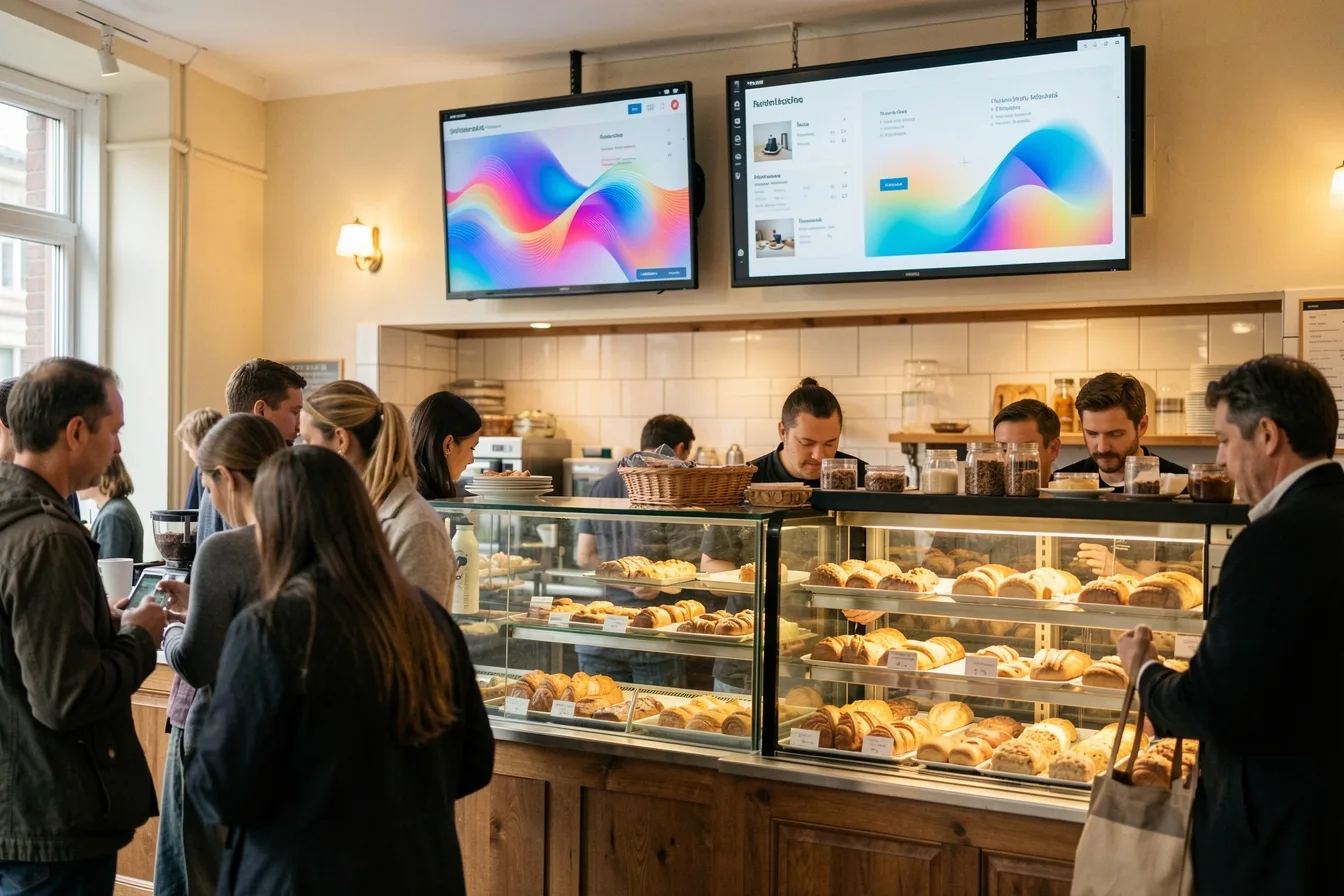
- Cafe with 2 menu boards above the counter. Two Verde PRO sticks powered from the TV USB ports, with CEC switching the screens off at 10 p.m. No electrician, and the menus survive a Wi-Fi drop thanks to offline playback.
- Gym with 6 ceiling-mounted screens. Run Ethernet if the ceiling allows it. Verde PRO has the port built in, while the Amazon stick needs 6 adapters and 6 outlets. The watchdog saves a ladder trip every time a player freezes.
- Retail flagship with an interactive product wall. BrightSign HD226, because the GPIO port reads the pick-up sensors and the 5-year warranty fits a capex budget.
| Player | Power behind the screen | Extra parts to budget | Best for |
|---|---|---|---|
| Look Verde PRO | TV USB port or adapter | None | 1 to 50+ standard screens |
| Amazon Signage Stick | Own adapter, separate outlet | $14.99 Ethernet adapter | Low-cost Wi-Fi screens |
| BrightSign HD226 | Locking 12 V supply | Wi-Fi module, microSD | Interactive, enterprise |
| Raspberry Pi 5 | 27 W USB-C supply | Supply, case, cooler, SD card | DIY and Linux teams |
| Generic Android box | Own adapter | Your setup time | One-screen pilots |
For full project budgets including screens, mounts and software, see how much digital signage costs in 2026.
Disclosure: Digital Signage Trends is published by Look Digital Signage.
FAQ
Is the Amazon Signage Stick good enough for a business?
Yes, for simple Wi-Fi screens such as menu boards and promo loops. It costs $99.99 and boots into your CMS in kiosk mode. Budget $14.99 for the Ethernet adapter and a free outlet for its power supply.
Do I need a dedicated player if my TV is a smart TV?
Not always. Look Player runs directly on LG webOS and Samsung Tizen, so a commercial smart display can work without a box. A dedicated player makes sense with consumer TVs, which can update themselves and reboot, or when you want the same hardware across every site.
Why is BrightSign so much more expensive?
You pay for GPIO, serial and dual Ethernet ports, a commercial OS and a 5-year warranty. The HD226 lists at $595, and B&H sells it for $525. For a standard looping screen, a $149 stick does the same visible job.
Can a digital signage player turn the TV on and off?
Yes, if both the player and the TV support HDMI CEC. The Look Verde PRO handles power, input switching and schedules over CEC. Test it on one TV first, because some models ship with CEC disabled in the settings menu.
How long does a signage player last running 24/7?
It depends on heat and power quality more than on brand. Passive-cooled players with no fan have fewer moving parts to fail, and a watchdog recovers from software hangs. Check the warranty: 1 year on the Amazon stick and the Verde PRO, 5 years on BrightSign Series 6.
Sources
- Look Verde PRO product page
- Amazon Signage Stick listing
- Brix: Amazon Signage Stick price and real cost
- piSignage: Amazon Signage Stick player notes
- Eye-In shop: Amazon Signage Stick specs and warranty
- Revel Digital: Fire TV vs Amazon Signage Stick
- B&H: BrightSign HD226 4K player
- CDW: BrightSign HD226
- Creation Networks: BrightSign HD226 specifications
- Midwich: BrightSign HD226 and accessories
- Raspberry Pi 5 product brief (April 2026)
- bret.dk: Raspberry Pi 5 review
- Raspberry Pi power consumption 2026