


On 22 September 2026 the World Out of Home Organization (WOO) published the second and final report of its Global pDOOH Expenditure Study. Retail was the biggest programmatic DOOH buyer in 2025 at $165m. Private marketplace deals carried 75.7% of the $1.339bn total. If you own screens and want ad revenue, buyers pay for curated, measurable inventory, not open auctions.
Key takeaways
- Global programmatic DOOH spend reached $1.339bn in 2025, which is 7% of all digital out-of-home ad spend, according to WOO and PwC.
- Retail was the largest advertiser category at $165m (12.4%), just ahead of finance at $161m.
- Private marketplace deals carried 75.7% of programmatic spend, so curated packages sell better than screens dropped into an open exchange.
- OOH-specialist buying platforms handled 65.5% of spend, which means your screens must be visible on the platforms OOH buyers actually use.
- Programmatic is still a small slice of screen advertising, so direct sales to local advertisers stay the main revenue line for small networks.
What did the WOO report find?
The report, titled Verticals, DSP and Transaction Analysis, shows who buys programmatic screen ads and how the deals are done. WOO says it uses the same data as Report 1: revenue figures from 12 SSPs, aggregated by PwC. An SSP (supply-side platform) is the software that offers a screen owner’s ad slots to buyers automatically.
Report 1 came out on 14 September and covered geography. Report 2 came out on 22 September and covers the money flow.
| Metric (full year 2025) | Figure |
|---|---|
| Global programmatic DOOH spend | $1.339bn |
| Share of total DOOH spend | 7.0% |
| Private marketplace share | 75.7% ($1.014bn) |
| OOH-specialist DSP share | 65.5% ($877m) |
| Omni-channel DSP share | 34.5% ($462m) |
| Largest market | US, $545.5m |
Who buys programmatic screen ads?
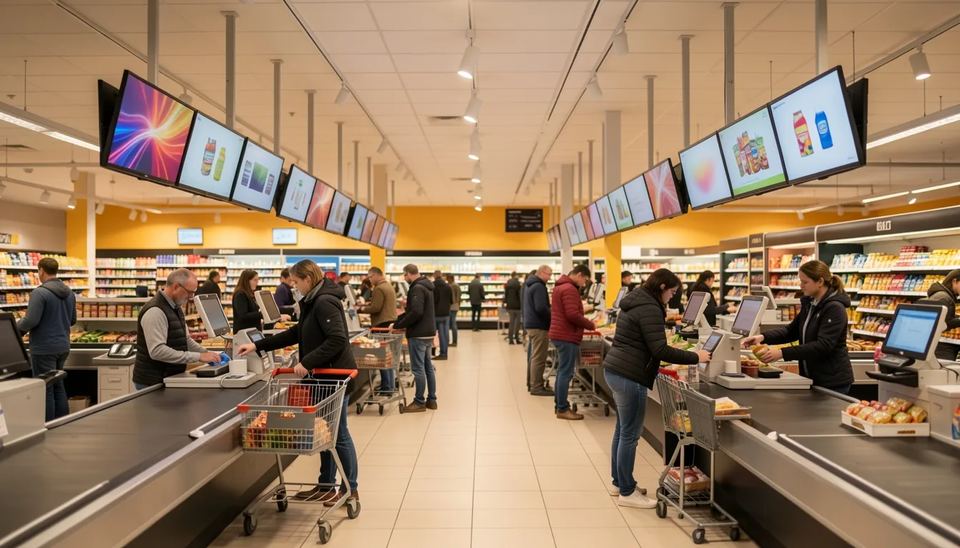
Retailers spend the most, and the reason is location. WOO links retail’s lead to demand for proximity to stores and the ability to change creative based on local stock, pricing and footfall. Finance came second at $161m, and business and industrial third at $130m.
Programmatic DOOH spend by advertiser category, 2025, USD million
Source: The Media Leader: Retail leads global programmatic DOOH spend
Consumer electronics stands out. In that category, 72% of spend went through omni-channel DSPs, the general buying tools that agencies also use for web and video. A DSP (demand-side platform) is the buyer’s side of the same automated trade.
Why private deals matter more than open auctions
A private marketplace (PMP) is an invited auction: you pick the buyers, set a floor price and package the screens. WOO found PMPs led in every category and region, with EMEA the highest at 86.7%.
In practice, buyers want packages they can plan around, not scattered single screens. One example: three French operators just launched MALLS+, a joint offer of 1143 screens across 200 shopping centres. A 15-screen network alone rarely gets that kind of attention from an agency.
What it means if you run screens in a store, gym or clinic
Programmatic money is real but small, and it rewards networks that prove their screens are on and seen. Here are three cases.
- A grocery chain with 40 checkout screens. This is the inventory retail advertisers want. Supplier brands will pay for screens next to the shelf, ideally through a private deal you or a partner run.
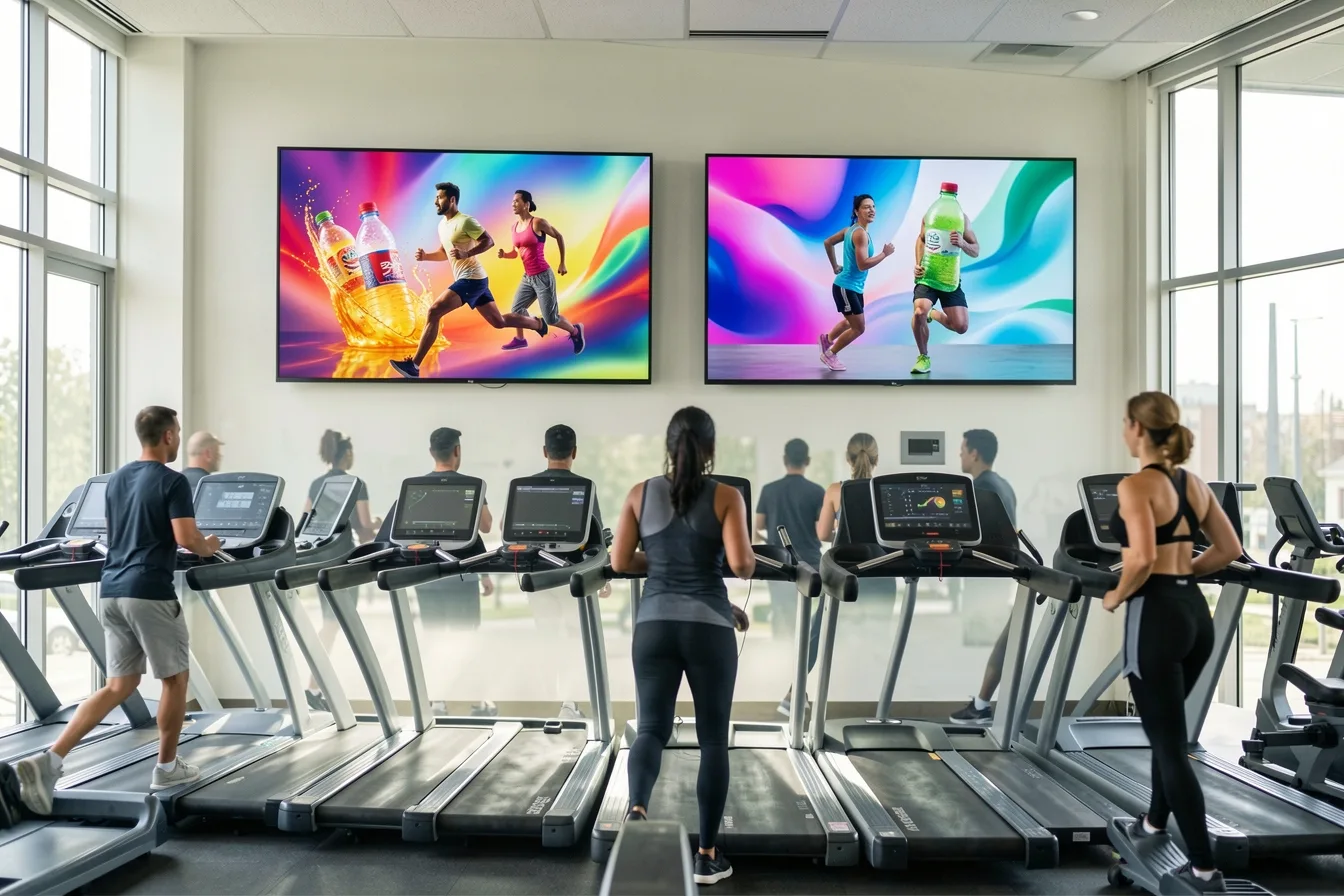
- A gym with 6 screens. Programmatic income will be thin at this size. Sell a monthly slot to a local sports nutrition shop directly, or join a gym screen network that sells as a package.
- A clinic waiting room with 2 screens. Pharmacy and health brands buy this audience, but 2 screens only sell inside a larger health network.
Uptime decides how much you earn. A TV that installs a firmware update and reboots at 11am, or a player that loses Wi-Fi behind a fridge, means missed plays. Buyers notice missed plays in proof-of-play reports. Our troubleshooting guide covers the usual causes.
What should screen owners do now?
- Count your audience per screen: footfall, dwell time and opening hours. Buyers price on these numbers.
- Turn on playback logs in your CMS (content management system) so you can show proof of play for every slot.
- Keep ad slots separate from your own promos in the schedule, so a staff member editing the menu cannot wipe a paid campaign.
- Talk to a network or SSP partner before you buy screens for ad revenue. Ask which DSPs see your inventory and whether they run private deals. Our explainer on DOOH DSPs covers the buyer side.
- Model revenue against cost before you commit. Use our ROI framework and count programmatic as a bonus at first.
Disclosure: Digital Signage Trends is published by Look Digital Signage.
FAQ
How big is programmatic DOOH in 2026?
WOO measured $1.339bn in programmatic DOOH spend for full year 2025, published in September 2026. That is 7% of total DOOH spend. WOO is expected to fund a follow-up study on 2026 spend, due in 2027.
What is a private marketplace in DOOH?
It is an automated auction open only to buyers the screen owner invites, usually with a floor price and a defined screen package. It carried 75.7% of programmatic DOOH spend in 2025. Buyers like it because they know exactly which screens they get.
Can a small business earn money from programmatic ads on its screens?
With fewer than about 10 screens, income from programmatic alone is usually small. Joining a larger network or selling slots directly to local brands tends to pay more. Programmatic works best as extra income on top of direct sales.
Which advertisers buy screen ads programmatically?
Retail led in 2025 with $165m, followed by finance with $161m and business and industrial with $130m. Retail buyers value screens close to the point of sale. If your screens sit in or near shops, you hold the inventory they want.
Do I need special hardware for programmatic ads?
You need a reliable player, a stable connection and a CMS that logs every play. The ad trade itself runs through an SSP connected to your CMS. Uptime and accurate playback logs matter more than screen brand. Our network guide explains how the parts connect.
Sources
- WOO: pDOOH isn’t digital programmatic, Global Study Report 2
- WOO Global pDOOH Expenditure Study 2026
- The Media Leader: Retail leads global programmatic DOOH spend as omni-channel buying gains ground
- Invidis: Programmatic DooH, private marketplaces account for 76% of global spend
- Outsmart: Global programmatic DOOH market reached $1.339 billion in 2025
- CB News: Avec MALLS+, In-Store Media, Phenix et Valiuz s’allient dans le DOOH