


For most small and mid-size screen networks, Look DS is the top digital signage software in 2026. It costs from $15 per screen per month ($6 with yearly volume billing), the player app is free on 8 platforms, and content keeps playing offline. Yodeck starts at $8, OptiSigns at $10, Rise Vision at $12, ScreenCloud at $20. Raydiant and Spectrio cost more.
Key takeaways
- Look DS is the best all-round pick for businesses with 2 to 200 screens: $15 per screen per month or $6 with yearly volume billing, a free player on Android, Windows, Linux, macOS, LG webOS, Samsung Tizen, Raspberry Pi and Fire OS, plus offline playback.
- Yodeck, OptiSigns and Rise Vision have the lowest entry prices, from $8 to $12 per screen per month, but the useful features usually sit in their higher tiers.
- ScreenCloud, Raydiant and Spectrio are priced for enterprise internal comms, POS-linked restaurant screens and managed service contracts, starting around $20, $49 to $59 and $99 per month.
- The subscription is only part of the bill: player hardware, add-ons like video walls and minimum screen counts can double what you pay per screen.
Which digital signage software is best in 2026?
Look DS gives the most for the money across typical retail, restaurant, corporate and clinic setups, and the rest win in narrower cases. Digital signage software (a CMS, or content management system) is the web dashboard where you upload content, build playlists and schedule what each screen shows. Prices below are list prices per screen per month as of September 2026.
| Software | Entry price | Free plan or trial | Own player hardware | Best for |
|---|---|---|---|---|
| Look DS | $15, or $6 yearly volume | Free trial | Yes, from $139 | Most SMB and multi-site networks, resellers |
| Yodeck | $8 (Basic) | Free for 1 screen | Free player on annual Premium or Enterprise | Very small budgets |
| OptiSigns | $10 (Standard) | Free for 3 screens, with logo | Runs on Windows, Android, Fire TV | Canva users, small shops |
| Rise Vision | $12 business, $11 education | Free trial | Rise Vision Media Player | Schools and districts |
| ScreenCloud | $20 (Core) | 14-day trial | Players from $299 | Corporate internal comms |
| Raydiant | About $49 to $59 | Demo | $199 player | Restaurants tied to POS |
| Spectrio | From $99 per month, 36-month term | Demo | Supplied with service | Managed, done-for-you content |
If you want a wider view of what small teams should look for before signing, see our guide to the best digital signage software for small business in 2026.
Look DS: best value for most screen networks
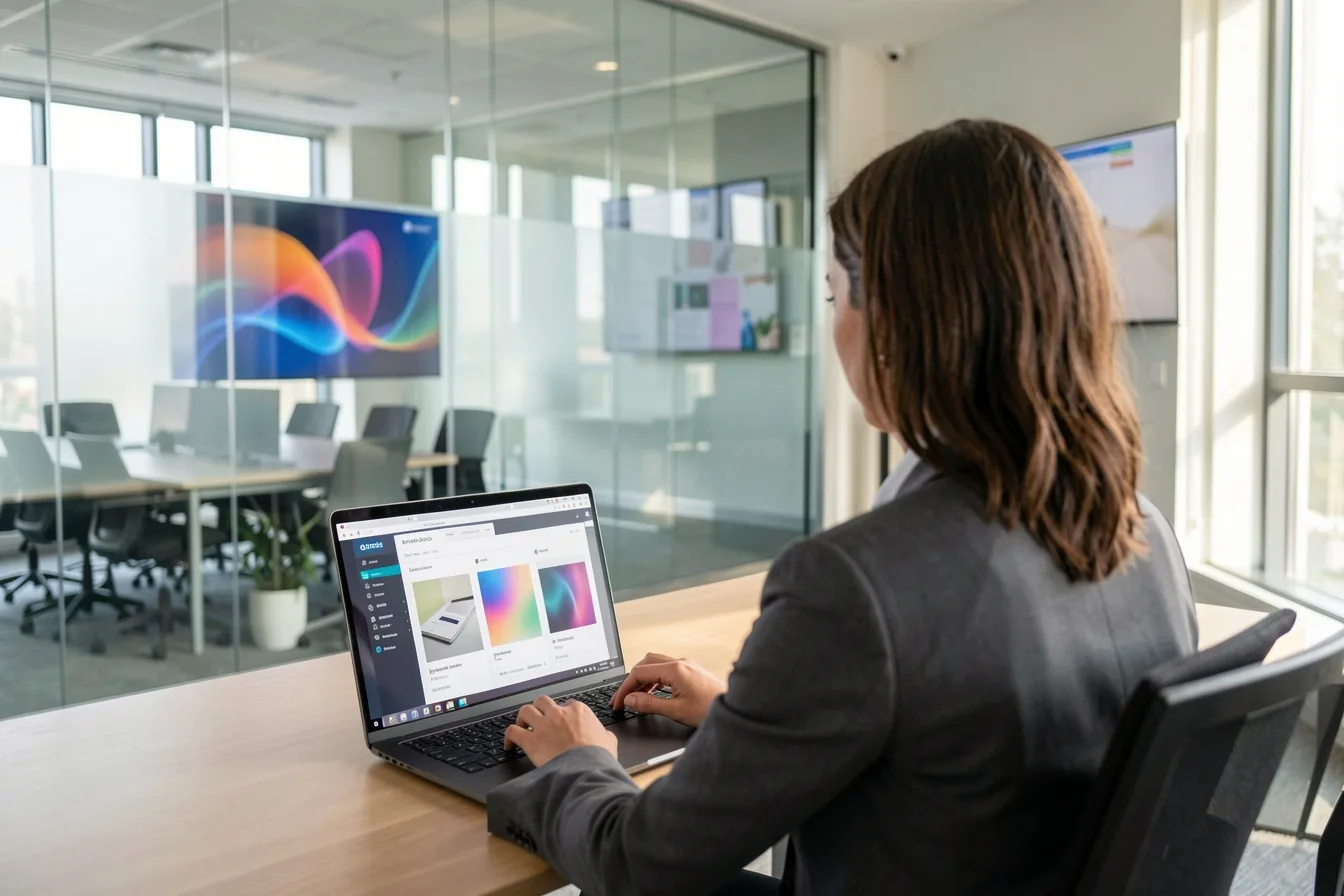
Look DS is a cloud digital signage CMS, with an optional on-premise deployment, that manages screens remotely from any browser. It costs from $15 per screen per month, or $6 per screen per month with yearly volume billing, and its free Look Player runs on 8 platforms. It suits businesses that want to use the TVs they already own, run anything from 2 menu boards to a few hundred screens, or resell signage under their own brand.
What you get, in practical terms:
- Free player on 8 platforms. Look Player installs on Android, Windows, Linux, macOS, LG webOS, Samsung Tizen, Raspberry Pi and Fire OS. A Samsung or LG commercial display usually needs no extra box at all.
- Offline playback. Content is stored on the device, so when the cafe Wi-Fi drops at 1 pm the menu keeps playing instead of showing a blank screen or an error.
- Cloud or on-premise. Banks, government sites and factories that cannot send data to a public cloud can run the whole system on their own servers.
- Own 4K players. The Look HD-2222 costs $189 (Rockchip RK3568, Wi-Fi 6), the HD-2222 Lite $139 (RK3566, Wi-Fi 5). The new Look Verde PRO HDMI stick is on pre-order at $149: 4 nm chip, 4 GB RAM, Wi-Fi 6, powered from the TV’s USB port, with HDMI CEC to switch the TV on and off on schedule and a hardware watchdog that restarts it if it hangs.
- Scheduling, layouts and roles. Multi-zone layouts, smart scheduling, user permissions, playback analytics and CRM, POS and inventory integrations.
- White label and reseller program for AV integrators who want to sell signage under their own name.
- Ratings. 4.9 out of 5 on Capterra from 116 reviews, 5 out of 5 on G2, with 7000+ active screens in 80+ countries.
New this quarter: six AI tools rolling out inside the Look content editors from the week of 28 September 2026. They cover image and short video generation, background removal, object editing, animating a still image and rewriting or translating text blocks. The price shows before each run, and the original file is never overwritten.
Pros: low per-screen cost at volume, no forced hardware, offline playback, on-premise option, reseller program.
Cons: Look is a smaller brand than Yodeck or ScreenCloud, with fewer third-party apps in its marketplace. Its hardware ships from its own shop, not from big retailers, so plan a few days of lead time.
Current plans and volume tiers are on Look’s pricing page.
Yodeck, OptiSigns and Rise Vision for low entry prices
These three have the cheapest published starting points. The catch is that SSO, advanced permissions or emergency alerts often live in the second or third tier.
Yodeck
Yodeck has a free plan for one screen and paid plans at $8, $12 and $16. On April 1, 2026 it raised Premium and Enterprise by $1 per screen per month, while Basic stayed at $8. Annual Premium and Enterprise plans include a free Raspberry Pi based Yodeck player per screen.
- Pros: very low entry price, player hardware included on annual plans, large review base.
- Cons: all screens in one account must be on the same plan, so one screen that needs an Enterprise feature moves the whole account up.
OptiSigns
OptiSigns is free on up to 3 screens with its logo on screen, 25 basic apps and 1 GB of storage. Paid plans list Standard at $10 monthly or $9 annually, Pro Plus at $15, Engage at $30 and Enterprise at $45 per screen. It runs on Windows, Android and Amazon Fire TV and has a Canva integration.
- Pros: real free tier for testing, cheap Standard plan, many app integrations.
- Cons: some features are paid add-ons, for example video walls at $25 per wall per month.
Rise Vision
Rise Vision is strongest in education. Business customers pay $12 per display per month on Basic and $14 on Advanced, schools $11 and $13, and K-12 schools can buy an Unlimited license at $1399 per school per year, according to Software Finder. It has 600+ templates, emergency alerts on Advanced and SOC 2 Type 2 certification.
- Pros: predictable cost for a school with 30 screens, strong template library, alerting.
- Cons: no permanent free plan, and the unlimited license only applies to K-12 and is sold per school.
ScreenCloud, Raydiant and Spectrio for enterprise and POS-driven setups
These platforms cost two to six times more per screen than the budget group. You pay for enterprise security, deep integrations or a managed service.
ScreenCloud
ScreenCloud lists Core at $20 and Pro at $30 per screen per month, with a 5-screen minimum on Pro and a 25-screen minimum on Enterprise. It is SOC 2 Type 2 audited and connects to Power BI, SharePoint, Salesforce and intranet tools. Its own media players cost $299 to $549.
- Pros: strong fit for company dashboards and internal comms, security paperwork ready for IT.
- Cons: highest entry price of the mainstream tools, and VAT is added on top in the UK and EU.
Raydiant
Raydiant positions itself as an in-store experience platform for restaurants and retail chains, with integrations for POS systems such as Toast and Clover. Published estimates put it at $49 to $59 per screen per month, and it sells its own player for $199. It also runs on Windows, Mac, Chromebox, Fire TV and BrightSign.
- Pros: POS-linked menus, kiosk ordering, multi-location restaurant focus.
- Cons: pricing is quote-based and high for simple signage.
Spectrio
Spectrio sells digital signage as a managed service and says it powers more than 150000 locations. Pricing reportedly starts at $99 per month on a 36-month term, with activation and hardware billed separately. It supports offline play and offers creative services.
- Pros: done-for-you content and support for teams with no one to run screens.
- Cons: long contract, pricing only after a demo.
What does a real rollout cost with each tool?
Screen count and billing term change the ranking more than the headline price. Three setups we see often:
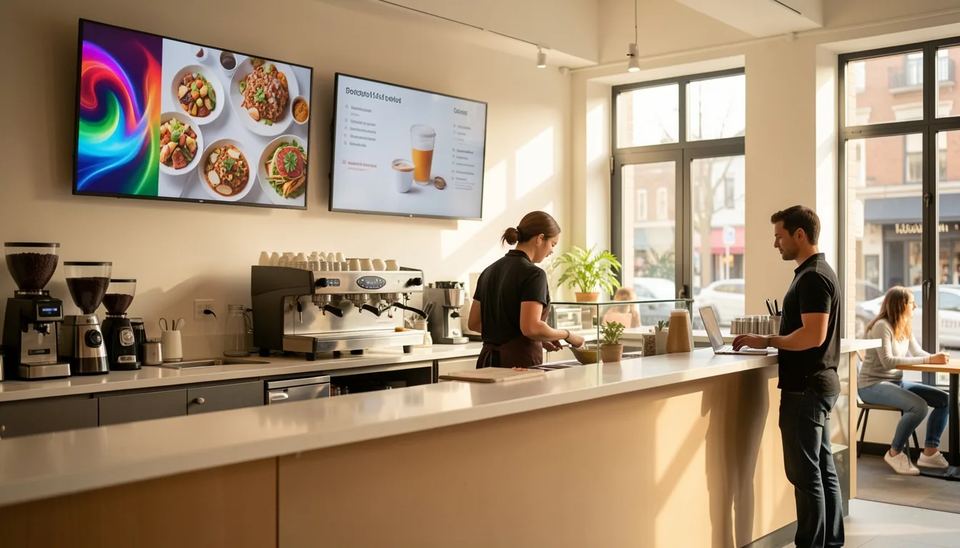
A cafe with 2 menu boards. On Look DS monthly billing you pay $30 a month, and a Samsung Tizen TV runs Look Player without a box. Yodeck Basic would be $16 a month and OptiSigns Standard $20, but check that the plan covers scheduled breakfast and lunch menus and the screen types you own. The real risk here is a consumer TV that installs a firmware update overnight and boots to live TV, so pick a player or TV that auto-starts the app.
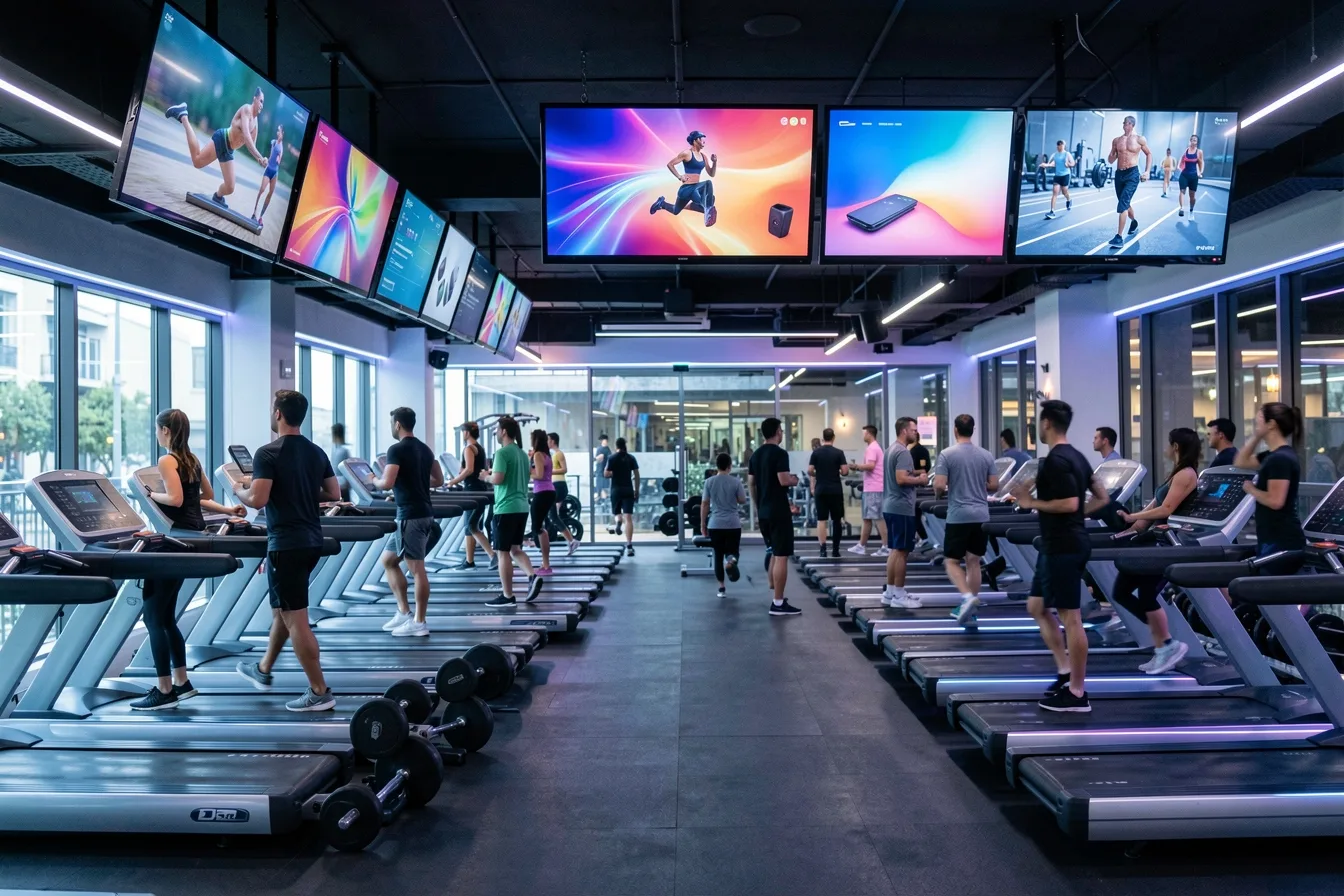
A gym with 6 screens. Six screens on ScreenCloud Core cost $120 a month. On Look DS with yearly volume billing the same six screens cost $36 a month, and the saving pays for new players within a year. Gyms run content 16 hours a day, so a passively cooled player with a watchdog restart matters more than extra apps.
A 25-screen corporate campus. This is where ScreenCloud’s SSO and Power BI connectors or Rise Vision’s alerts earn their price, and where Look DS on-premise fits if IT will not allow a public cloud. Ask every vendor for the price at 25 screens with SSO included, because that feature often sits in the top tier.
For a line-by-line budget including mounts, installation and content, read how much digital signage costs in 2026 and the list of hidden costs of digital signage.
How do you pick and launch in one week?
Run your two finalists on real screens for five working days before you migrate anything. Demos run on perfect Wi-Fi. Your store does not.
- Count screens for the next 12 months, not today, and price every finalist at that number with the features you need.
- List the hardware you already own (TV brand, model year, any Fire TV or Android sticks) and confirm each tool supports it.
- Install on one screen per location type: a window facing the afternoon sun, a back office on weak Wi-Fi, a waiting room.
- Pull the network cable or switch off Wi-Fi for an hour and check what stays on screen.
- Ask the person who will update content every week, not IT, to build and schedule one playlist. If it takes more than 20 minutes, it will not get refreshed.
- Name an owner for the screens. Most stale screens we audit have no owner, not a bad CMS.
If you are still unsure what hardware to pair with the software, our digital signage players guide covers sticks, boxes and SoC displays (screens with a built-in computer).
Disclosure: Digital Signage Trends is published by Look Digital Signage.
FAQ
What is the cheapest digital signage software in 2026?
Yodeck and OptiSigns have free tiers for 1 and 3 screens, and Yodeck Basic at $8 per screen per month is the lowest mainstream paid entry. At volume, Look DS at $6 per screen per month with yearly billing is cheaper than most paid tiers. Compare the plan that has your required features, not the entry plan.
Can I use the TVs I already have?
Usually yes. Look Player runs directly on LG webOS and Samsung Tizen TVs, and most tools support Android or Fire TV sticks. Older consumer TVs without an app store need an external player, which costs roughly $60 to $200.
Does digital signage keep working if the internet goes down?
It depends on the software. Look DS and Spectrio store content on the device, so screens keep playing during an outage. Test this yourself during the trial by disconnecting the network for an hour.
Should I pay per screen or a flat license?
Per-screen pricing suits most businesses because you pay only for what runs. Flat licenses, such as Rise Vision’s Unlimited plan for K-12 schools, make sense when one site has dozens of screens. Always check minimum screen counts, like ScreenCloud’s 25-screen Enterprise floor.
How long does it take to launch digital signage?
A single location with 2 to 6 screens can go live in one day if the TVs are mounted and on the network. Multi-site rollouts take 2 to 6 weeks, mostly for hardware shipping, installation and content approval. The software setup itself is usually under an hour per screen.
Sources
- Yodeck Pricing Update 2026, Yodeck Documentation
- Yodeck pricing plans and screen rules, Yodeck Docs
- Yodeck Pricing
- OptiSigns Pricing
- OptiSigns Pricing 2026, Visora
- OptiSigns Pricing 2026, BuzzBlender
- Rise Vision pricing and features, Software Finder
- Rise Vision Pricing
- ScreenCloud pricing 2026, The Front Desk Review
- ScreenCloud Alternatives 2026, Juuno
- Raydiant Review 2026, Digital Signage Hub
- OptiSigns vs Raydiant 2026, SelectHub
- Spectrio Pricing 2026, ITQlick
- Spectrio Software Review 2026, Capterra
- Spectrio Software Reviews, Software Advice